Male rhinoplasty is not female rhinoplasty performed on a man. The aesthetic targets are different: a straight dorsum rather than a gentle curve, a 90–95° nasolabial angle rather than the feminine 100–110°, stronger tip projection, and — above all — no feminisation. Dr. Erdal's approach begins with preserving masculine identity and refines from there.
Male rhinoplasty requires a different mental model than female rhinoplasty. The easiest way to over-operate on a male patient is to apply female aesthetic standards to a male face — producing a nose that looks post-operative in every photograph. Below are the technical commitments that underpin every male rhinoplasty case in this practice.
The goal is a refined version of the patient's nose — not a nose from a celebrity photograph. The strongest compliment a male rhinoplasty patient receives is "you look well" rather than "you look different". Identity preservation drives every decision.
The masculine dorsum is straight or minimally curved. A 1–2 mm dorsal curve that would look feminine on a female patient looks feminising on a male patient. Conservative hump reduction — leaving a straight line rather than an over-reduced scoop — is the single most critical technical choice.
The angle between the upper lip and the columella should be 90–95° in men versus 100–110° in women. Over-rotation of the tip is the fastest route to a feminised appearance. Tip support is engineered to hold masculine projection and avoid late rotation as healing progresses.
Male noses frequently have thick, sebaceous skin that masks fine refinements and prolongs swelling. The answer is structural cartilage grafting — pushing the new framework against the skin from inside rather than trying to over-reduce the underlying bone and cartilage. Strong framework shows through thick skin.
Many male patients present with a combination of aesthetic concerns and breathing difficulty — often from previous trauma (sports, accidents). Combined septorhinoplasty addresses both in one operation. Internal nasal valve preservation is non-negotiable — aesthetic reduction that compromises airflow is not a success.
Ultrasonic (piezo) bone reshaping replaces mallet-and-chisel osteotomies where suitable — less bruising, less soft-tissue oedema, faster recovery. Preservation rhinoplasty retains nasal ligaments and soft-tissue envelopes where anatomy permits. Modern technique, applied selectively, not as a marketing label.
Rhinoplasty outcomes are not subjective — they are measurable. Male and female noses differ on defined anatomical and angular parameters. Operating on a man without internalising these specific targets is how feminisation happens.
The angle between the upper lip and the columella. In women: 100–110° (open, upward-rotated tip). In men: 90–95° (closer to perpendicular). An over-rotated male tip is the single most recognisable sign of feminised rhinoplasty.
Straight or minimally curved in men. Women may have a 1–2 mm supratip curve. In men, that same curve produces a "ski jump" appearance that reads as feminine. Aggressive hump reduction risks creating this deformity. Conservative reduction is the rule.
Male tips should project strongly from the face, with refined but not over-defined tip-defining points. Over-thinning of lower lateral cartilages produces a pinched or surgical-looking tip that ages poorly and shouts "rhinoplasty".
The male nasal base is wider and more robust than the female. Over-narrowing by aggressive osteotomies or alar base reduction produces a feminised chin-to-nose proportion. Width reduction is done conservatively, preserving masculine balance.
These values are population averages and individual variation matters — strong facial features may call for slightly different targets. The principle is that a male rhinoplasty plan must be built around male aesthetic standards, not derived from a female template with small adjustments.
Understanding the layers matters — especially for male patients with thick skin, where what lies beneath determines what is visible on the surface. Rhinoplasty is not skin surgery; it is a structural operation on bone, cartilage and soft tissue envelope.
Paired bones forming the upper third of the dorsum. In men these are thicker and wider than in women, requiring different osteotomy planning. Piezo ultrasonic cutting is particularly useful here — precise reshaping without fracture-related bruising.
Form the nasal sidewalls and the upper part of the internal nasal valve. Must be preserved or reconstructed to protect breathing. The internal valve is the narrowest point of the male airway and is the single most common site of surgery-induced breathing problems.
Define the shape, projection and rotation of the nasal tip. Over-thinning produces the pinched, surgical-looking tip that ages poorly. Controlled tip plasty with tip support grafts maintains masculine projection and resists late rotation.
The cartilaginous and bony partition between left and right nasal airways. Deviation causes breathing obstruction and is commonly repaired simultaneously with aesthetic surgery (septorhinoplasty). The septum also provides cartilage graft material for structural work.
Technique choice is driven by anatomy, goals, previous surgery history, and functional concerns — not by marketing preference. Each approach has specific indications and specific trade-offs.
| Technique | Best indication | Scar | Approach | OR time | Recovery |
|---|---|---|---|---|---|
| Closed rhinoplasty | Dorsal hump reduction, minor tip refinement, good skin quality | None visible (endonasal) | Preservation-friendly | 1.5–2 h | 7 days splint |
| Open rhinoplasty | Severe tip work, significant grafting, revision cases | 4 mm columellar (fades) | Full visualisation | 2–3 h | 7 days splint |
| Septorhinoplasty | Combined aesthetic + breathing problems (common in sports-injury men) | Approach-dependent | Open or closed | 2.5–3 h | 7–10 days splint |
| Piezo rhinoplasty | Thick male nasal bones, reduced bruising priority | Approach-dependent | Ultrasonic bone reshaping | Adds ~30 min | Less bruising |
| Preservation rhinoplasty | Straight dorsum preservation, dorsal hump patients with good profile | Approach-dependent | Dorsal preservation + push-down | 2 h | Faster oedema resolution |
| Revision rhinoplasty | Previous surgery with unsatisfactory result (wait 12+ months) | Typically open | Open, often with rib graft | 3–4.5 h | 10–14 days splint |
| Post-traumatic reconstruction | Sports injuries, road accidents, broken noses with deformity | Approach-dependent | Often open + grafting | 2.5–4 h | 7–10 days splint |
All procedures performed under general anaesthesia in accredited hospital facilities. Splint (external thermoplastic cast) is standard for 7 days post-operatively. Return to contact sports: 6 weeks minimum regardless of technique.
Rhinoplasty is one of the most technically demanding aesthetic operations and carries a higher revision rate than any other cosmetic procedure. Figures below reflect aggregated international literature for contemporary technique. Smokers, revision cases, and very thick-skinned patients have elevated rates.
Most commonly in the first 24–48 hours from septal mucosa. Managed with packing; rarely requires theatre return. Smokers and patients on aspirin/NSAIDs have elevated rates.
Rare with modern peri-operative antibiotics. Septal abscess is the most serious infective complication and requires urgent drainage. Good surgical technique and nasal hygiene prevent.
Reported revision rates vary widely. Minor contour refinements are common; major revisions less so. Conservative primary technique, realistic pre-operative discussion, and 12+ month follow-up before judging result reduce revision demand. Revision rates are typically 2–3× higher in previously operated noses.
Thick sebaceous skin (common in male patients, particularly Middle Eastern and Mediterranean ethnicities) holds oedema much longer than thin skin. Final result can take 12–18 months. Post-operative steroid injections, taping protocols, and patience are the management.
A hole through the septum, usually the result of bilateral septal mucosa tears during septoplasty. Produces whistling, crusting, bleeding. Most heal spontaneously; persistent perforations can be repaired secondarily.
Can result from internal valve narrowing, over-aggressive lateral osteotomy, or septum complications. Prevented by preserving internal valve anatomy, using spreader grafts where indicated, and avoiding aggressive width reduction. Combined septoplasty usually improves breathing rather than worsening it.
Feminisation is not a statistical complication — it is a planning error. A technically clean operation with the wrong targets can produce a nose that is anatomically correct but looks feminine, requiring revision surgery that is difficult to plan around. Getting male aesthetic goals right from the start is the entire practice.
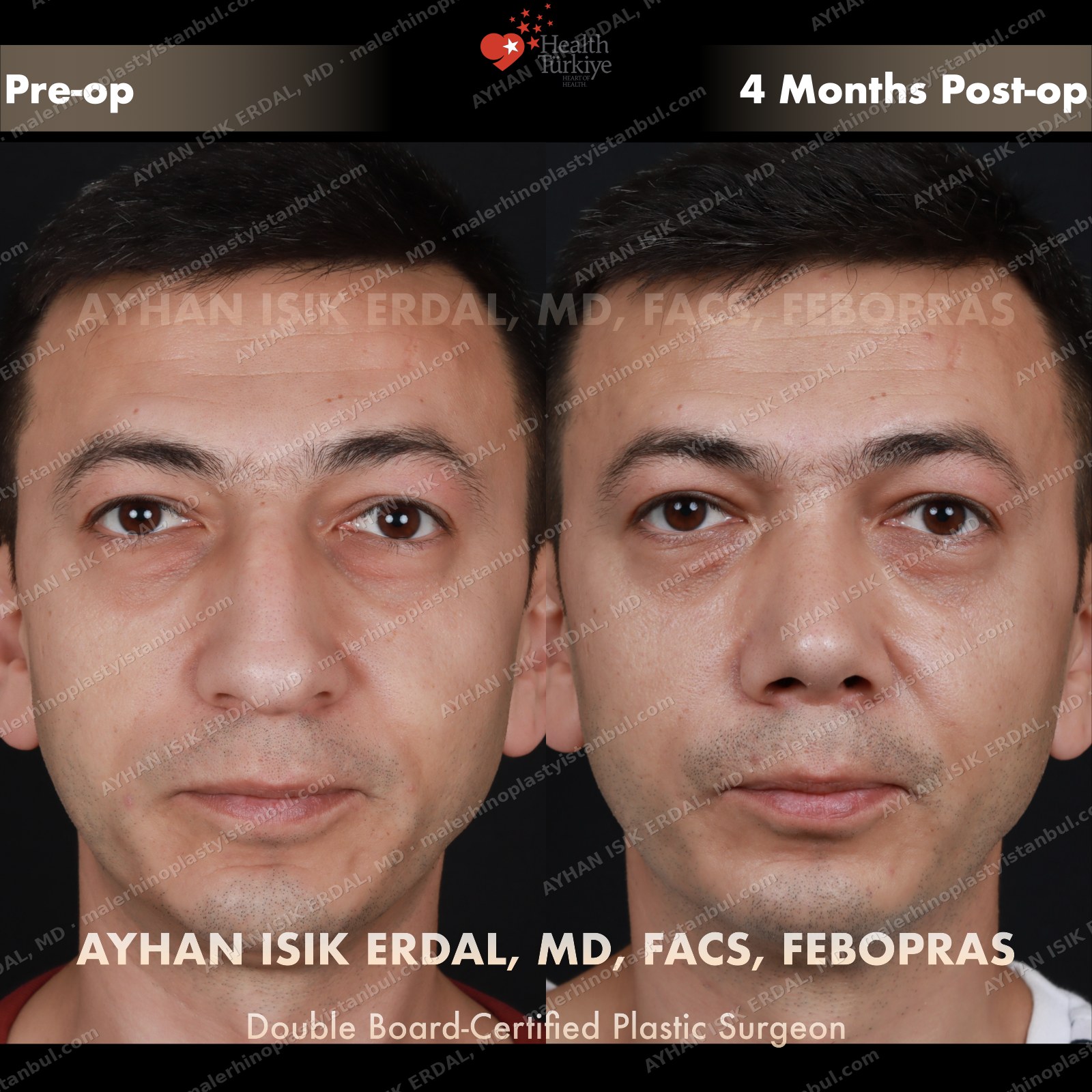
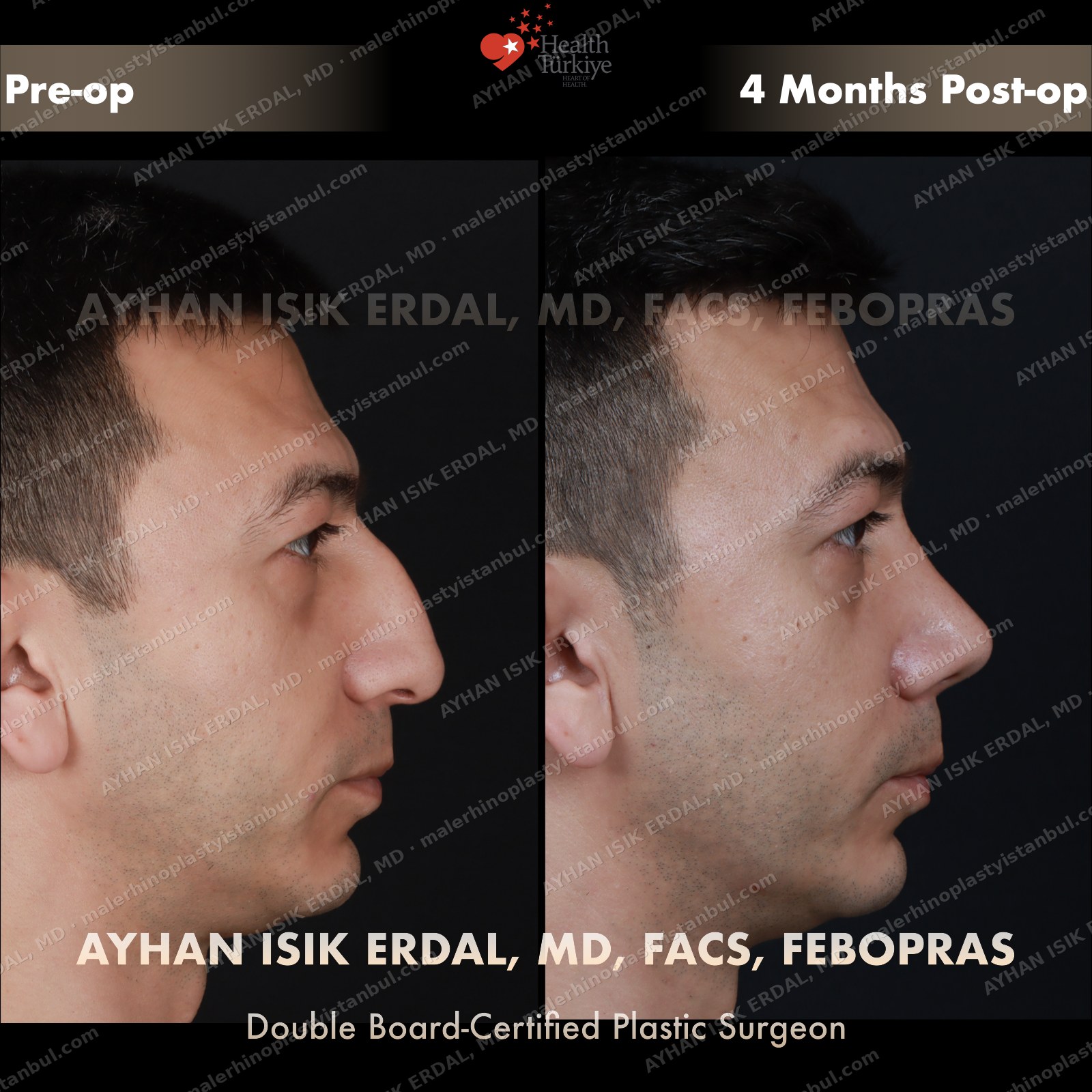
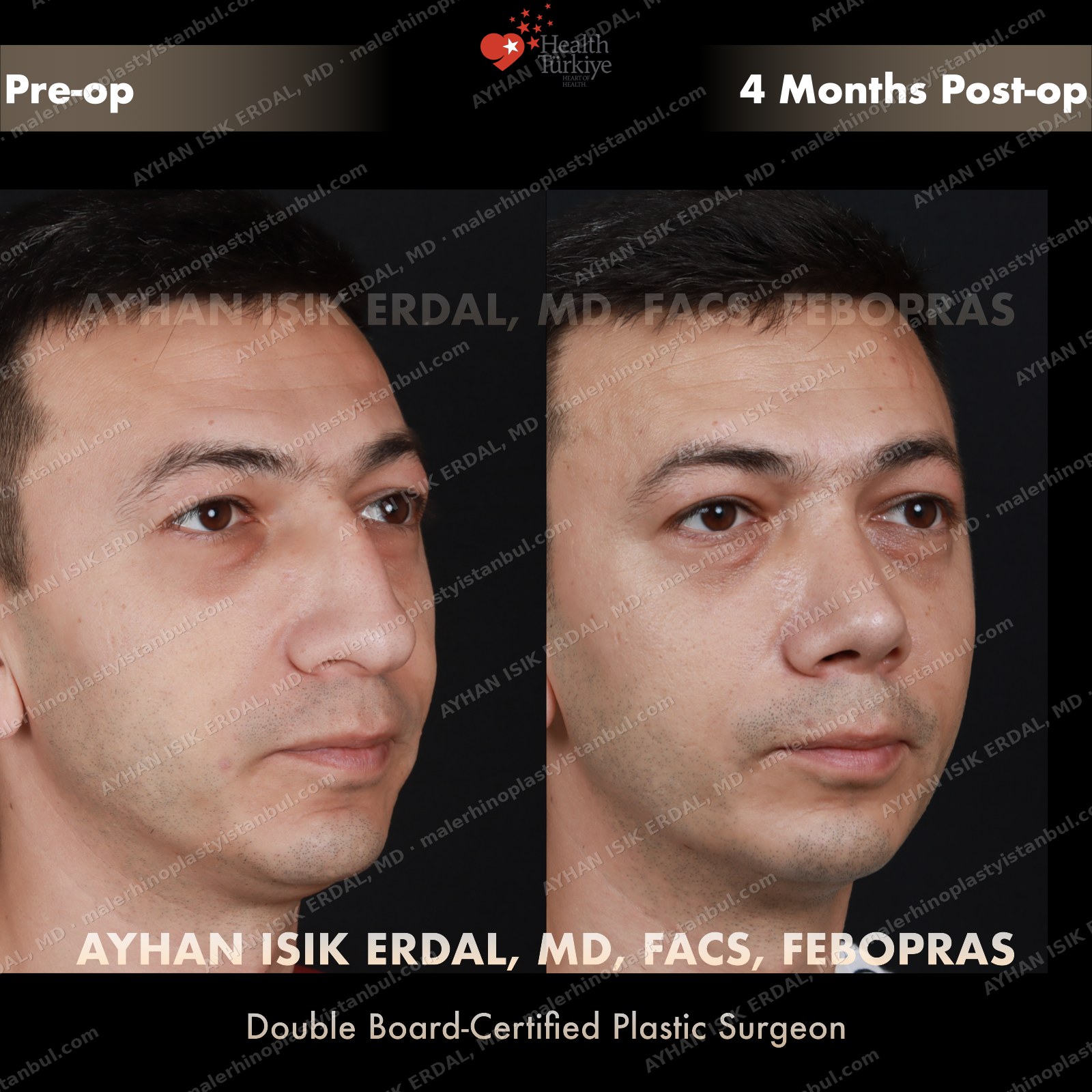
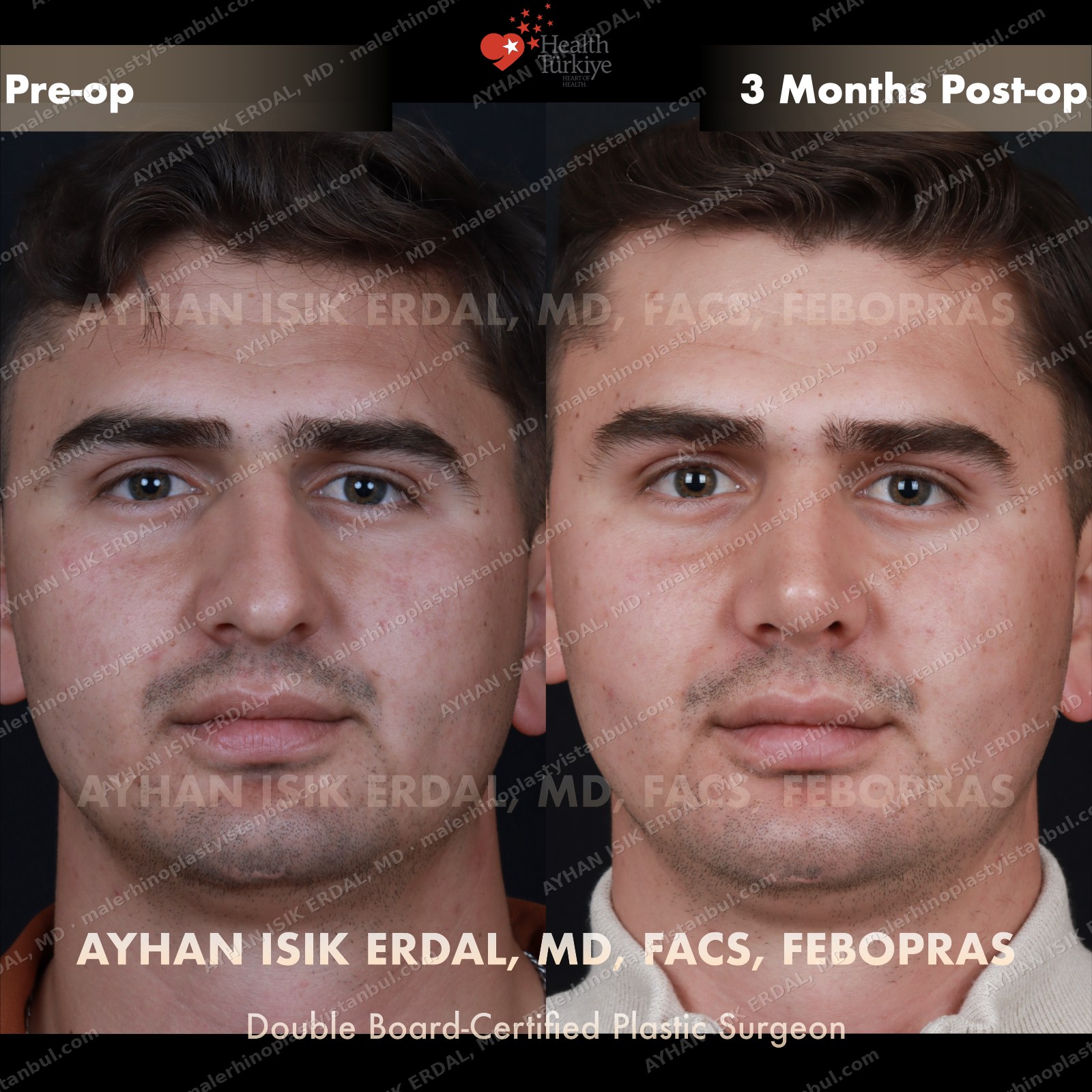
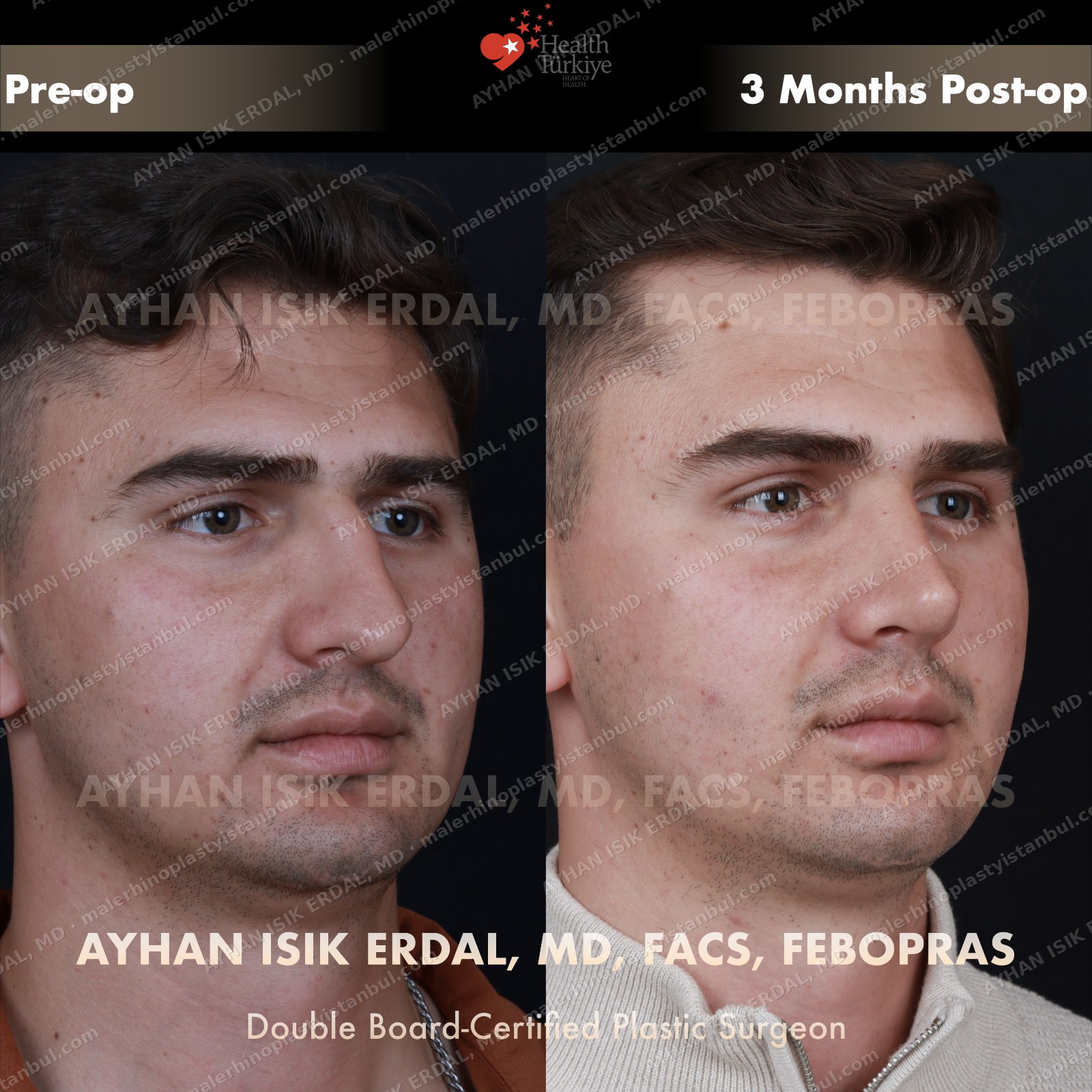
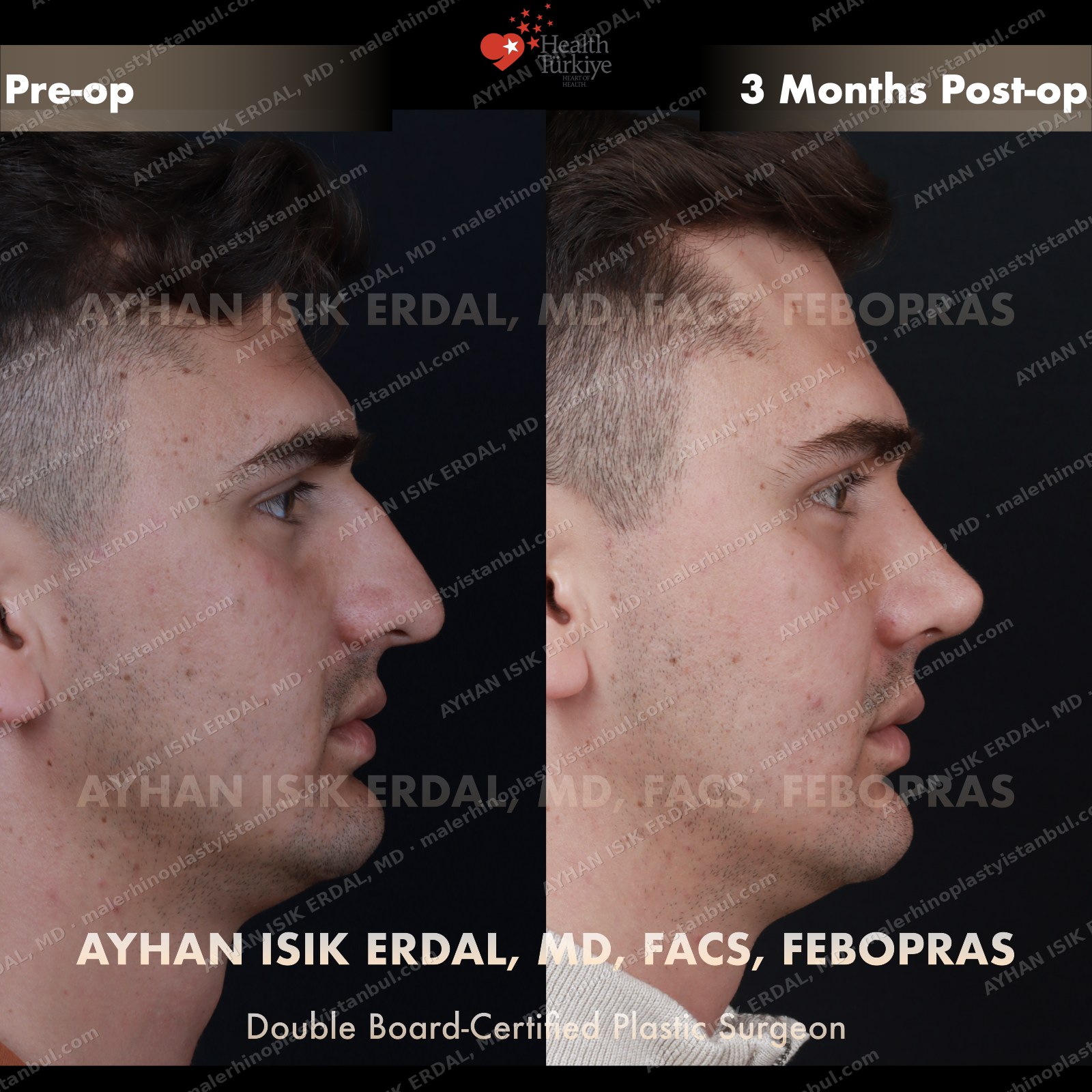
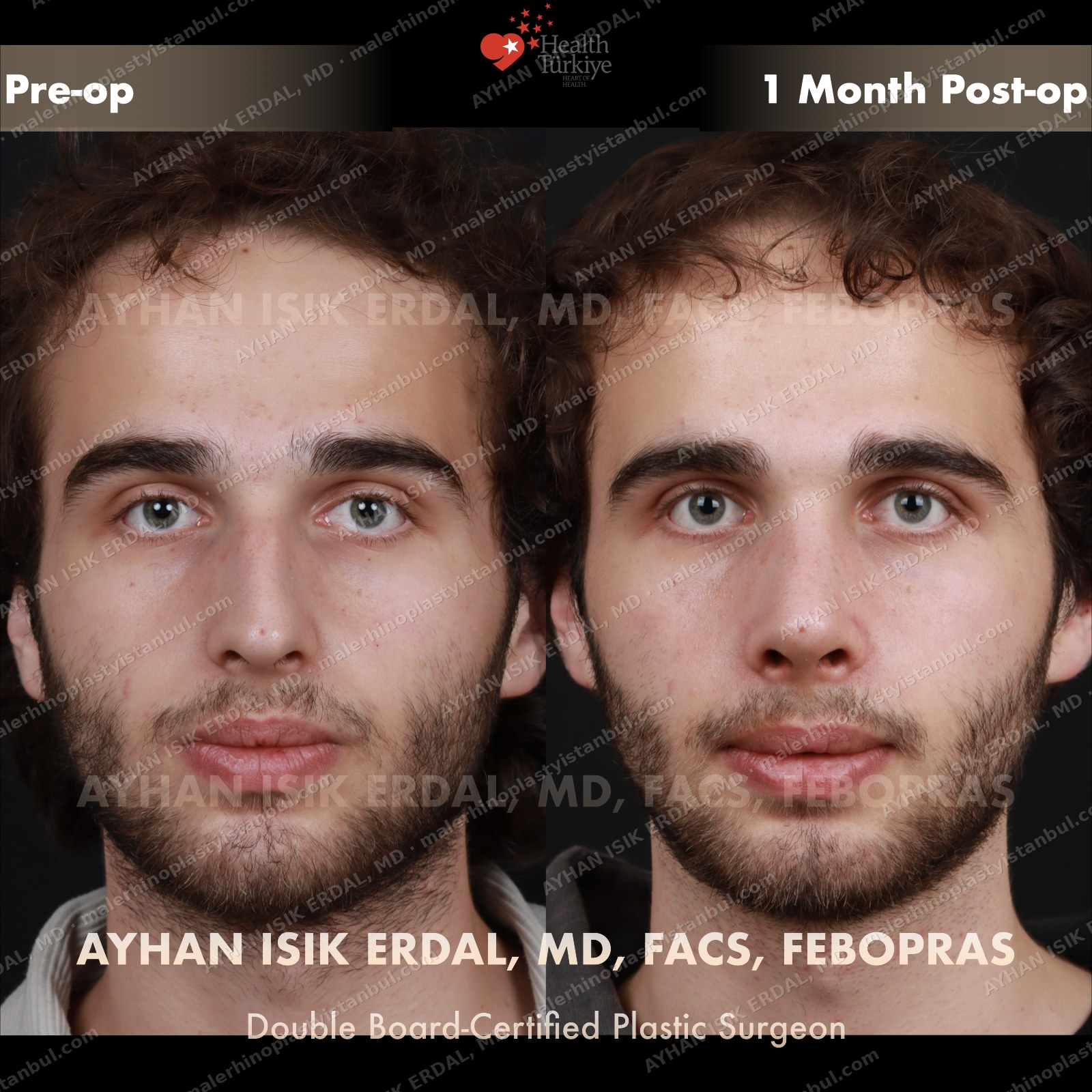
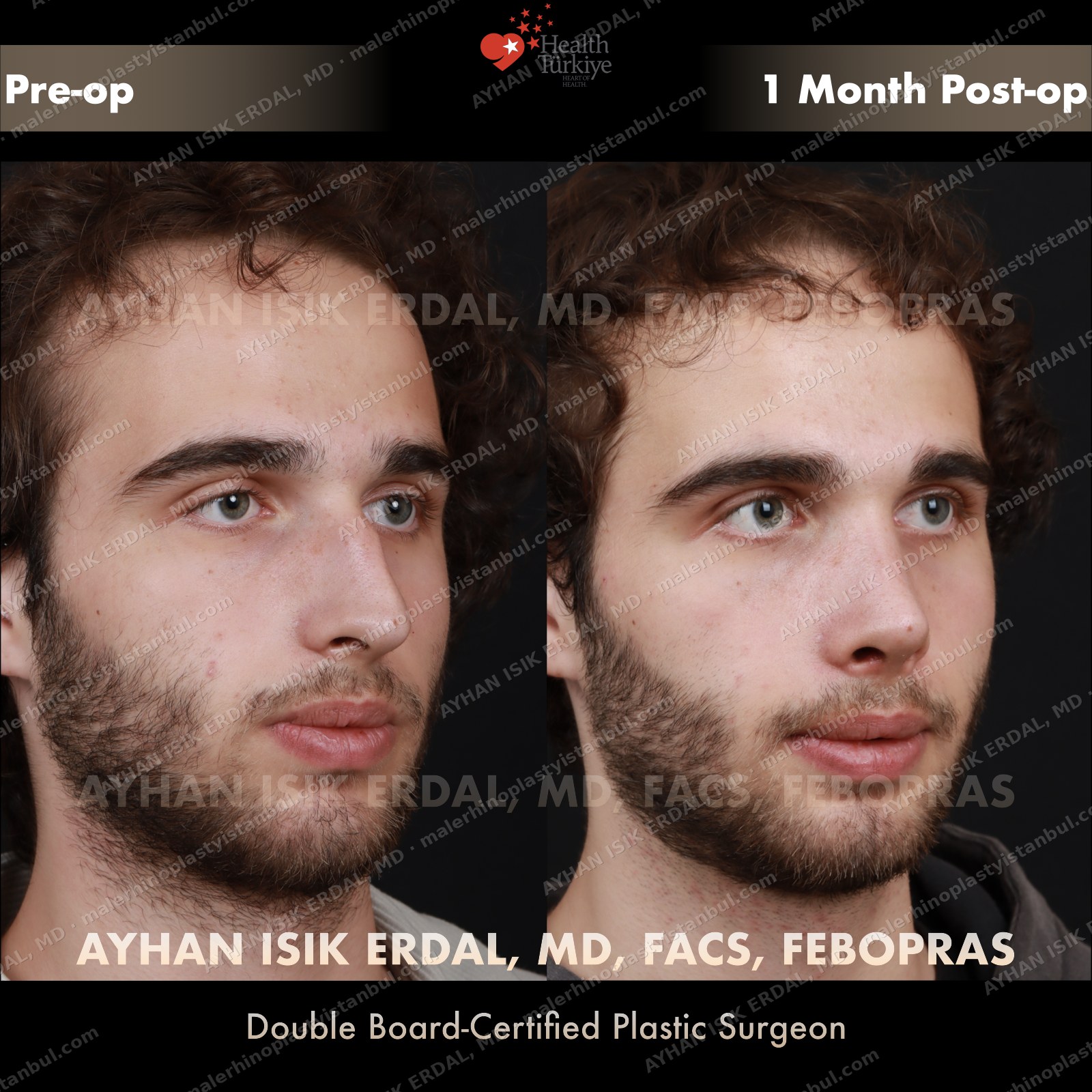
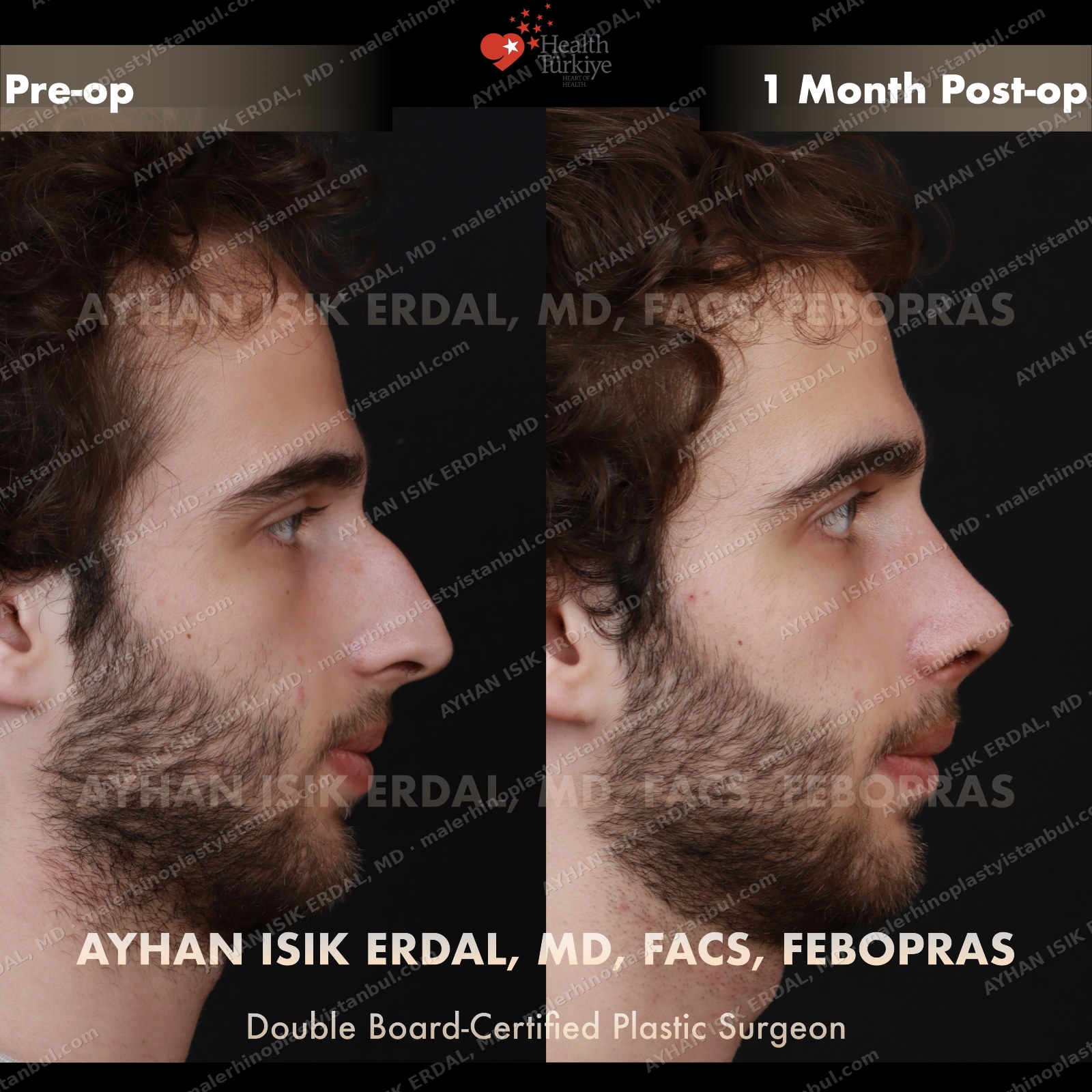
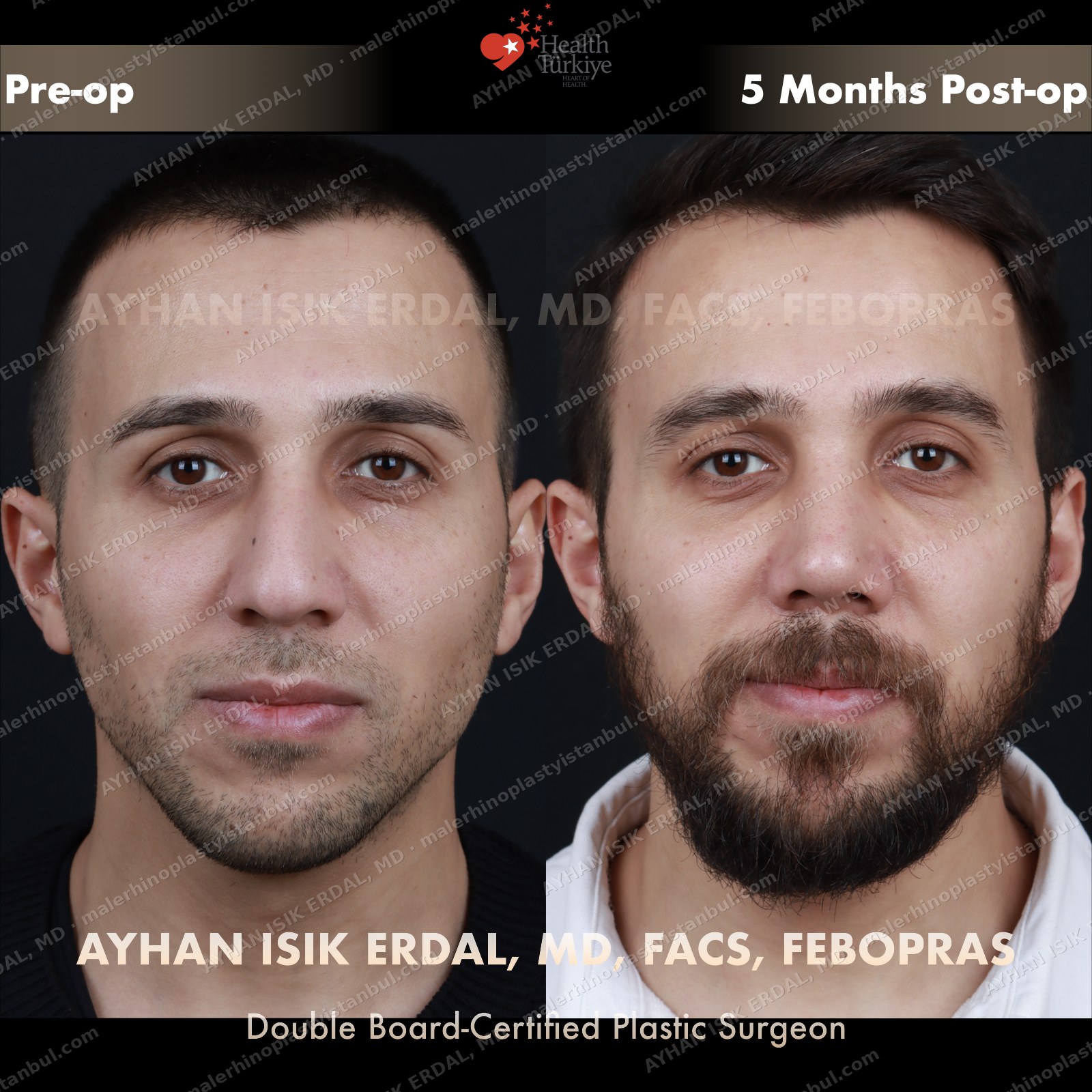
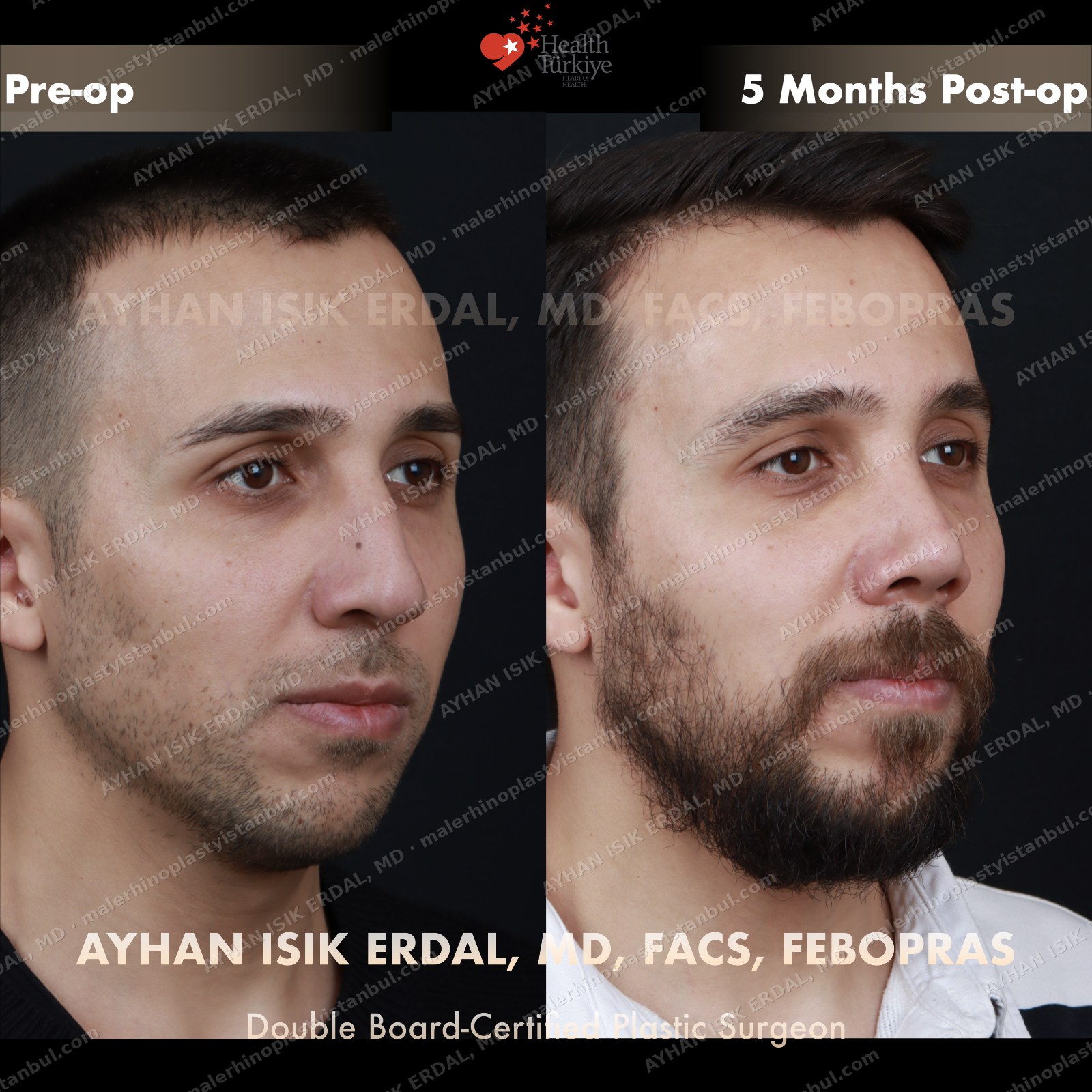
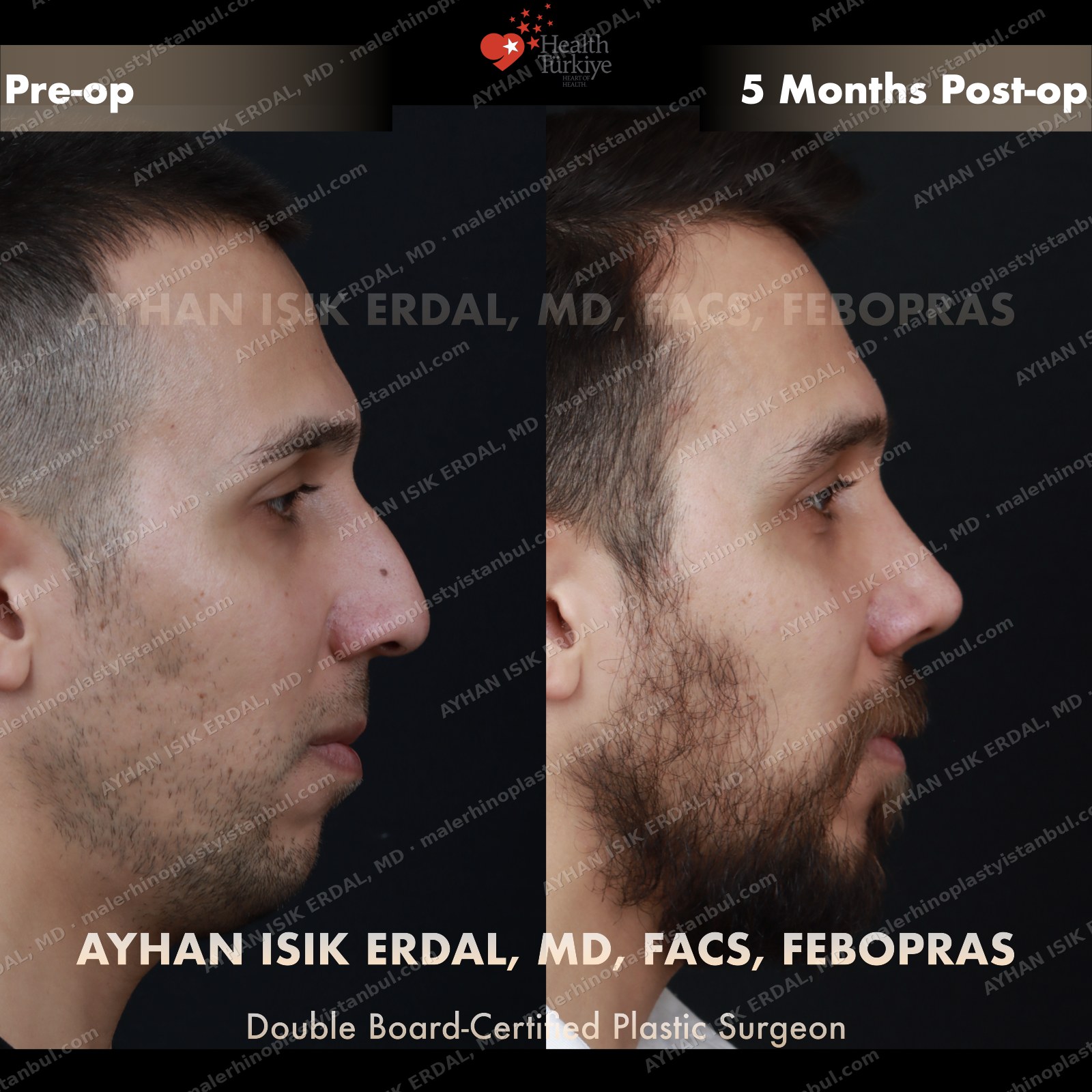
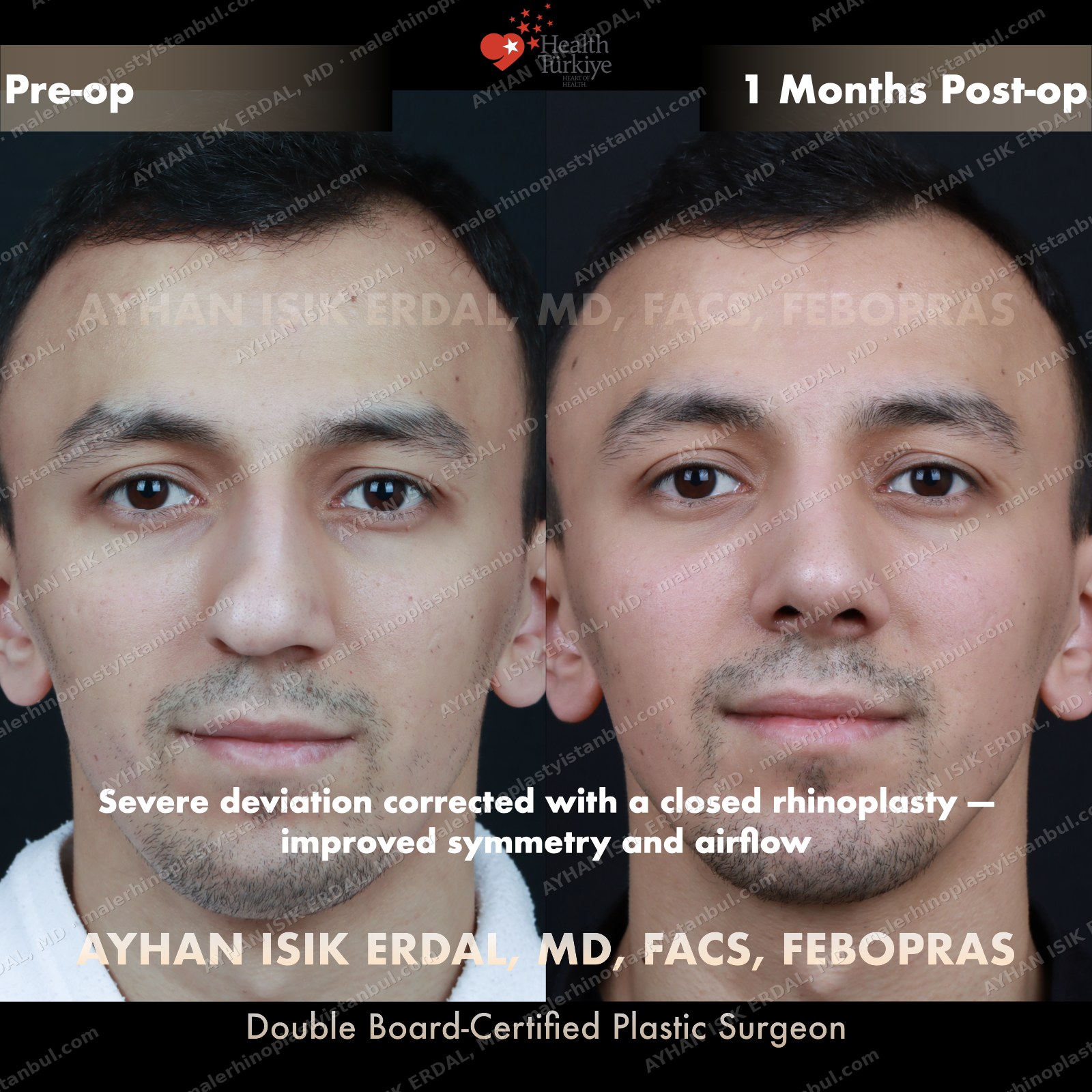
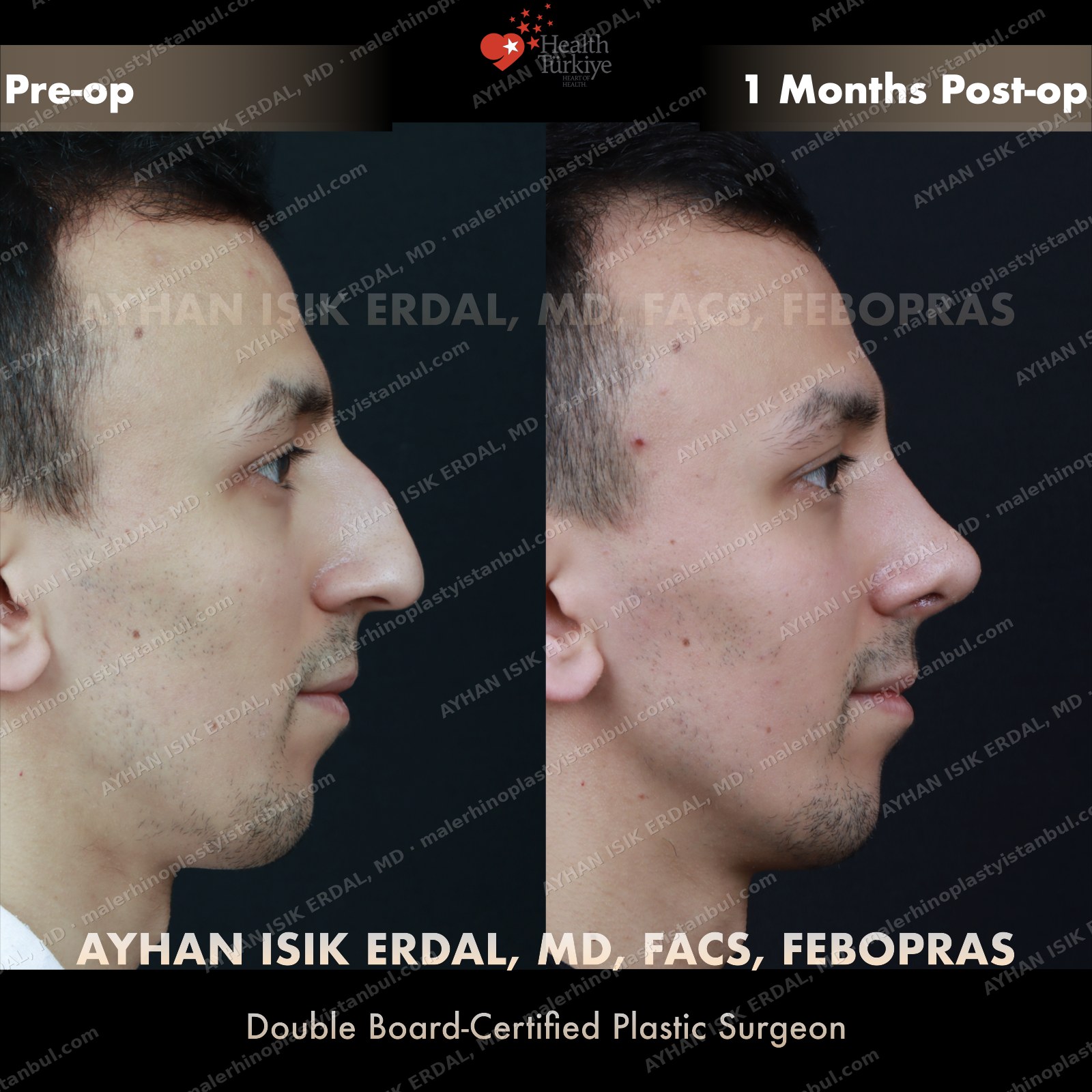
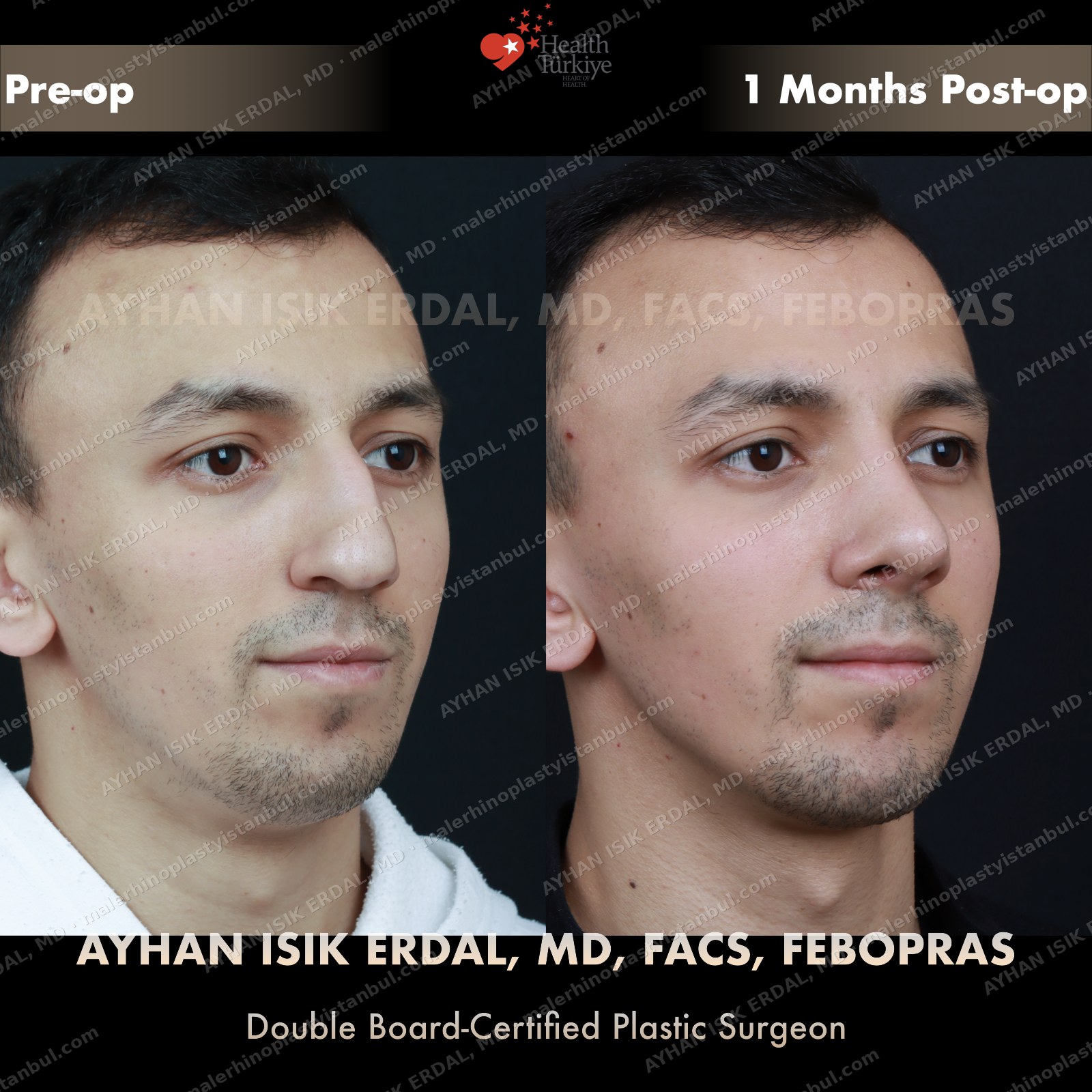
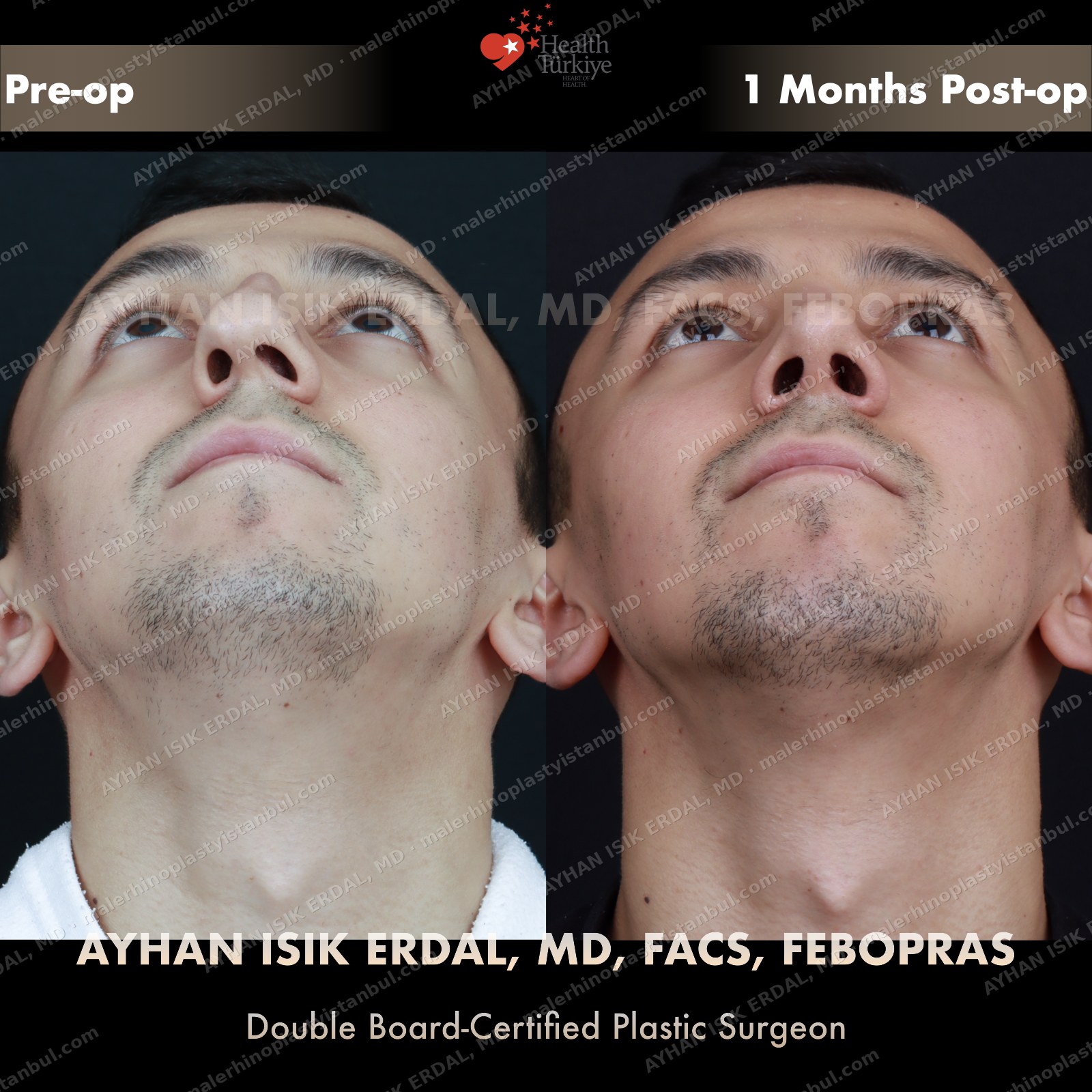
Photographs below show actual Dr. Erdal patients, shared with written consent. Each composite shows the same angle pre-operatively and at the stated post-operative timepoint. Click any image to enlarge.


Honest assessment at consultation produces better outcomes than optimistic assessment. These are the factors reviewed at every male rhinoplasty consultation — and which, when appropriately addressed, separate a predictable operation from an unpredictable one.
Assessed by palpation and observation at consultation. Thick sebaceous skin limits fine refinement visibility and prolongs swelling. Pre-operative isotretinoin (low-dose, 3–6 months) can thin very oily skin in selected cases under dermatology supervision. Patients must understand that thick-skin results take 12–18 months to mature — not 6 weeks.
Minimum 4 weeks pre-operatively, 4 weeks post-operatively — ideally longer. Smoking elevates wound complication rates, delays mucosal healing, impairs skin retraction, and raises the risk of columellar wound issues in open cases. Vaping and nicotine replacement patches are also discouraged during the peri-operative window.
Full disclosure of any previous surgery (even functional septoplasty), closed reductions after trauma, or significant facial injury. Scar tissue alters surgical planes and cartilage quality. Revision rhinoplasty is substantially more complex than primary and usually requires cartilage grafting from ear or rib. Minimum 12 months from previous surgery before revision is considered.
Nasal obstruction, snoring, mouth breathing, sleep disruption — any of these warrants formal airway evaluation. Deviated septum, turbinate hypertrophy, and internal valve collapse are common in male patients with sports-injury history. Functional correction combined with aesthetic surgery is efficient and often required for optimal outcome.
Patients who bring photos of female celebrity noses as reference are carefully redirected to realistic male aesthetic targets. Reference photos of masculine noses the patient admires are welcome and useful. Honest discussion of what male anatomy can achieve — and what would feminise the face — is part of pre-operative planning.
Rhinoplasty has higher rates of body dysmorphic disorder (BDD) than any other aesthetic procedure. Perceiving severe deformity that does not match physical examination, history of multiple revisions without objective improvement, fixation on minor asymmetries — all require careful evaluation. BDD is a relative contraindication to surgery until addressed with appropriate psychological support.
Assoc. Prof. Dr. Ayhan Işık Erdal
MD, FACS, FEBOPRAS · Plastic, Reconstructive & Aesthetic Surgery
"The hardest operation in aesthetic surgery is the one where the patient should leave looking unchanged to everyone except themselves — refined, rested, more confident, but unmistakably the same man."
— Assoc. Prof. Dr. Ayhan Işık Erdalisotretinoin protocols for very oily skin, and post-operative steroid injections to manage residual swelling.Extended reading on the aesthetics, techniques, and specific clinical situations in male rhinoplasty. Written for patients who prefer detail.
Two short messages from Dr. Erdal — a welcome and practical tips for planning your journey to Istanbul.
International patients receive VIP airport transfer, coordinated accommodation at Antwell Suites (ground-floor clinic for daily follow-ups), pre-operative hospital workup, 1-night hospital stay, external splint fitted and removed before departure, and full follow-up through return home.
Recovery-friendly 1+1 suites with full kitchen, separate bedroom and spacious bathroom — situated above a ground-floor clinic where Dr. Erdal's team conducts post-operative checks during the first week.
Typical length of stay for male rhinoplasty is 7–10 days — covering surgery, external splint removal at day 7, and one final post-operative check before departure. Revision or complex cases may require longer.
Please include standing frontal, lateral (profile — both sides), and three-quarter photos with good lighting, your height and weight, any relevant medical/medication history, previous nasal surgery or trauma, and any breathing concerns. Response within 24 hours.
Dr. Erdal's clinic holds the Republic of Turkey Ministry of Health International Health Tourism Authorization — the legal prerequisite for treating international patients in Turkey. Any clinic treating international patients without this authorization is operating outside the law.
Certificate No: 2026034015610080000444996 · Issued: 10.03.2026 · Republic of Turkey Ministry of Health, General Directorate of Health Services